Quick facts
- Recommended departure city: Xining
- Direct trains also run from: Beijing, Shanghai, Guangzhou, Chengdu, Chongqing, Lanzhou and Xi'an
- Approximate travel time from Xining: 20–24 hours
- Recommended cabin: Soft Sleeper
- Highest point of the railway: Tanggula Pass, approximately 5,072 metres / 16,640 feet
- Elevation of Lhasa: approximately 3,650 metres / 11,975 feet
- Tibet Travel Permit: required for international travellers
- Independent travel in Tibet: generally not permitted for international travellers
- Recommended booking method: arrange the train, permits and Tibet itinerary through an appropriately authorised travel agency
- Best travel periods: April to June and September to mid-November
- Important note: train numbers, schedules, routes and journey times may change seasonally. Final arrangements should always be reconfirmed before departure.
One railway, many starting points
Every passenger train to Lhasa travels the same final leg: the Qinghai–Tibet Railway, the highest railway in the world. What differs is where you board. Trains to Lhasa start from Xining, Beijing, Shanghai, Guangzhou, Chengdu, Chongqing, Lanzhou and Xi'an — the through trains simply join the same plateau line at Xining, where most of the through services call in the late afternoon and the high-country scenery begins the following morning.
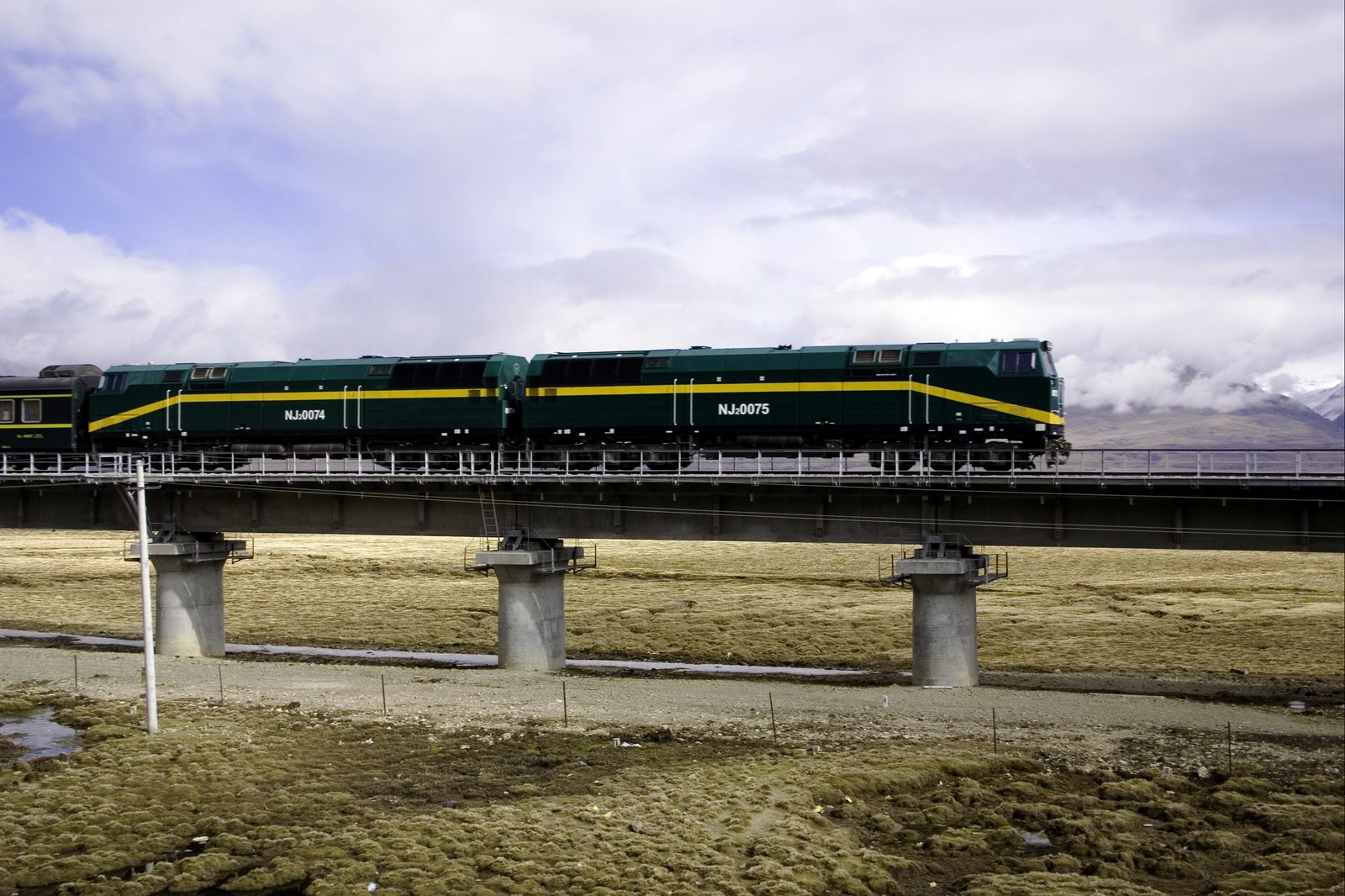
Photo: Henry Chen / Wikimedia Commons, CC BY-SA 2.0
The current routes at a glance. Numbers and times below are the 2026 schedules; all change with the season and are reconfirmed before ticketing.
| Board at | Train | Frequency | Journey | Distance | Soft sleeper, one way |
|---|---|---|---|---|---|
| Xining | Z8981, Z8991, Y839 and more | four or more departures daily | 20–22 hours | 1,956 km | ¥781 |
| Lanzhou | through trains (Z21, Z164, Z264…) | daily | about 23 hours | — | — |
| Xi'an | through trains (Z164, Z264) | daily | about 31 hours | — | — |
| Chengdu | Z322 from Chengdu West | every other day, 21:10 | about 34½ hours | 3,070 km | ¥997.5 |
| Chongqing | Z223 | every other day | about 33 hours | — | — |
| Beijing | Z21 from Beijing West | daily, 19:22 | about 40 hours | 3,757 km | ¥1,144 |
| Shanghai | Z164 | daily, 18:33 | about 45 hours | 4,373 km | ¥1,262.5 |
| Guangzhou | Z264 | daily, 09:26 | about 53½ hours | 4,980 km — the longest | ¥1,468 |
Fares are the net one-way prices in Chinese yuan for a Soft Sleeper berth (roughly USD 110–210 depending on the route); Hard Sleeper costs about two thirds as much, and a Hard Seat about 30 per cent of it. Two practical notes: there is no direct train from Hong Kong — travellers join at Guangzhou — and no train from Nepal at all, only the overland road or a flight. On a couple of the longer routes a two-berth Deluxe Soft Sleeper appears on some departures; ask us what is running when you book.
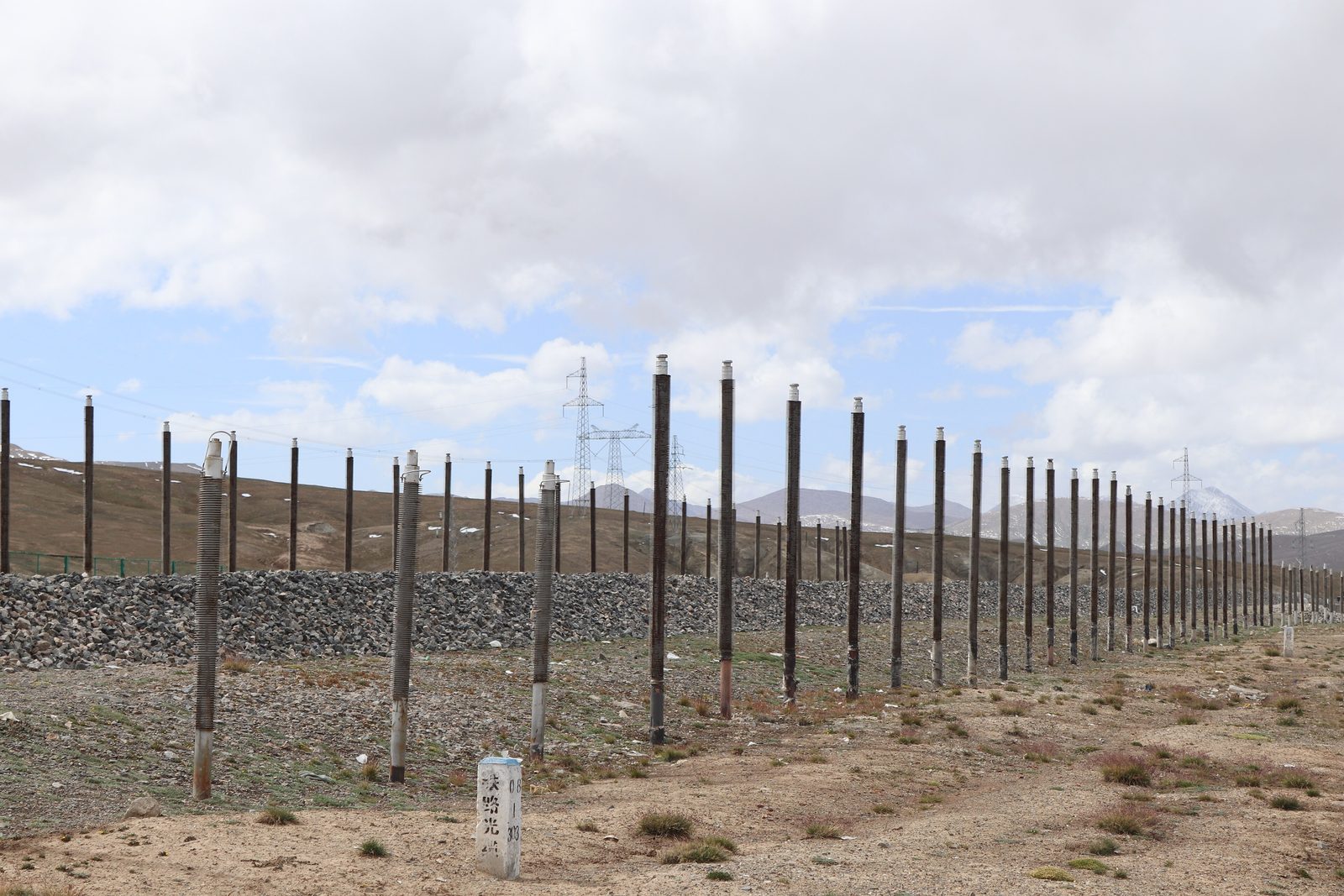
Photo: Liuxingy / Wikimedia Commons, CC BY-SA 4.0
Why travel to Tibet by train?
The train is best suited to travellers who value the journey as much as the destination.
Its greatest appeal is the Qinghai–Tibet Railway itself. After leaving Xining, the route crosses the northeastern Tibetan Plateau before continuing through Golmud, the Kunlun Mountains, the Hoh Xil region, the Tanggula Mountains, Nagqu and finally Lhasa.
Depending on the season, weather, daylight and train schedule, travellers may see:
- Qinghai Lake and the grasslands beyond Xining
- The salt-lake landscapes around Golmud
- The Kunlun Mountains
- The open wilderness of Hoh Xil
- Tibetan antelope, wild donkeys and yaks
- The headwaters of major Asian rivers
- Tanggula Pass, the highest point of the railway
- Cuona Lake, one of the most beautiful sections of the journey
- The grasslands and pastoral communities of northern Tibet
Weather and daylight strongly influence the experience. Some famous landscapes may pass during the night, and wildlife sightings can never be guaranteed.
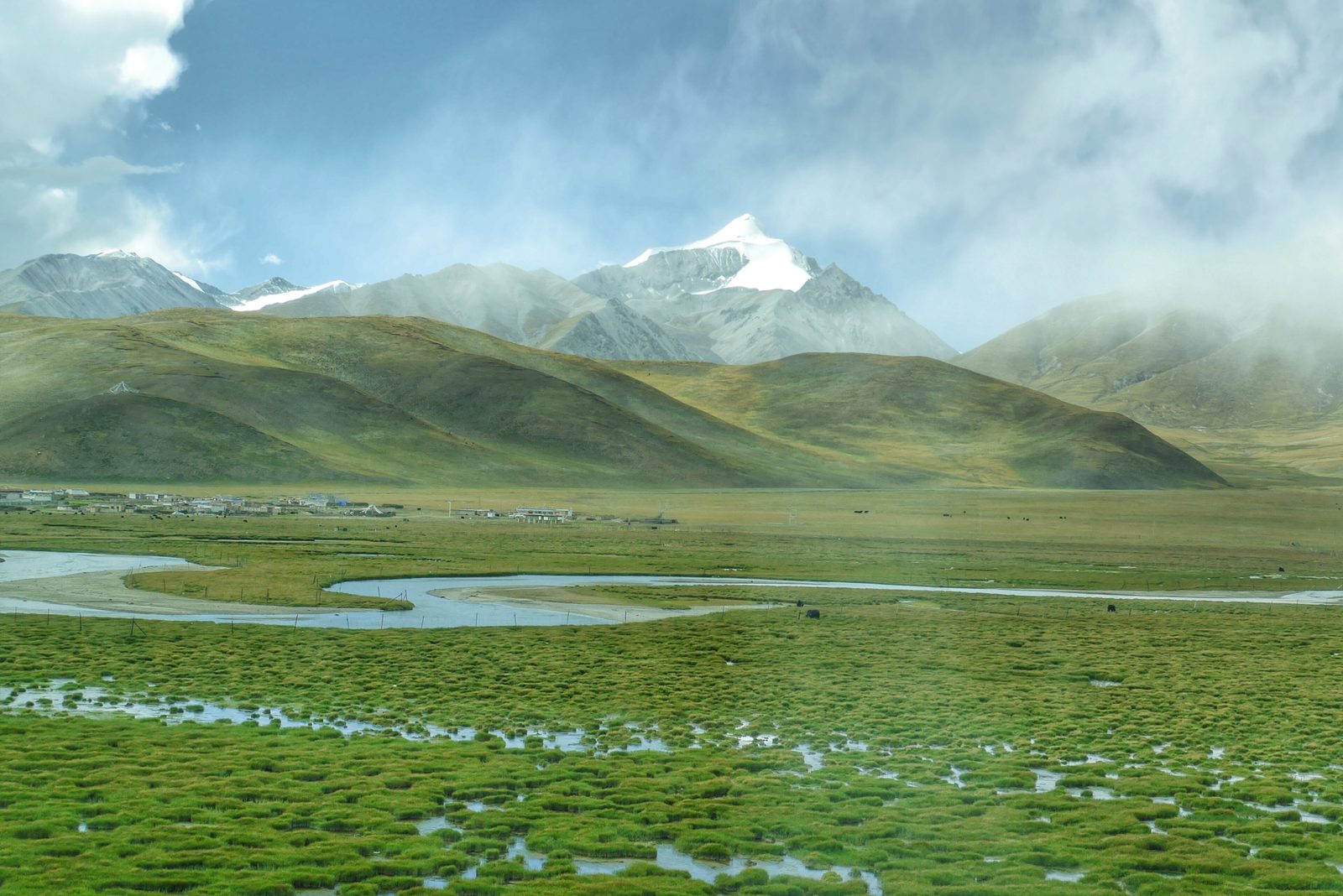
Photo: travel oriented / Wikimedia Commons, CC BY-SA 2.0
Does the train help with altitude acclimatisation?
To some extent, but it should not be considered complete protection against altitude sickness.
The train climbs more gradually than a flight, allowing travellers to experience the change in elevation over a longer period. However, it still reaches extremely high altitude relatively quickly. Passengers also remain inside an oxygen-supported carriage during much of the highest section.
| Point along the line | Altitude |
|---|---|
| Xining | 2,275 m — the first point where a few travellers feel the height |
| Golmud | 2,829 m — the onboard oxygen systems switch on here |
| Tanggula Pass | 5,072 m — the highest point on any railway in the world; Tanggula station, at 5,068 m, is the highest railway station on earth |
| Nagqu | about 4,500 m |
| Lhasa | 3,650 m |
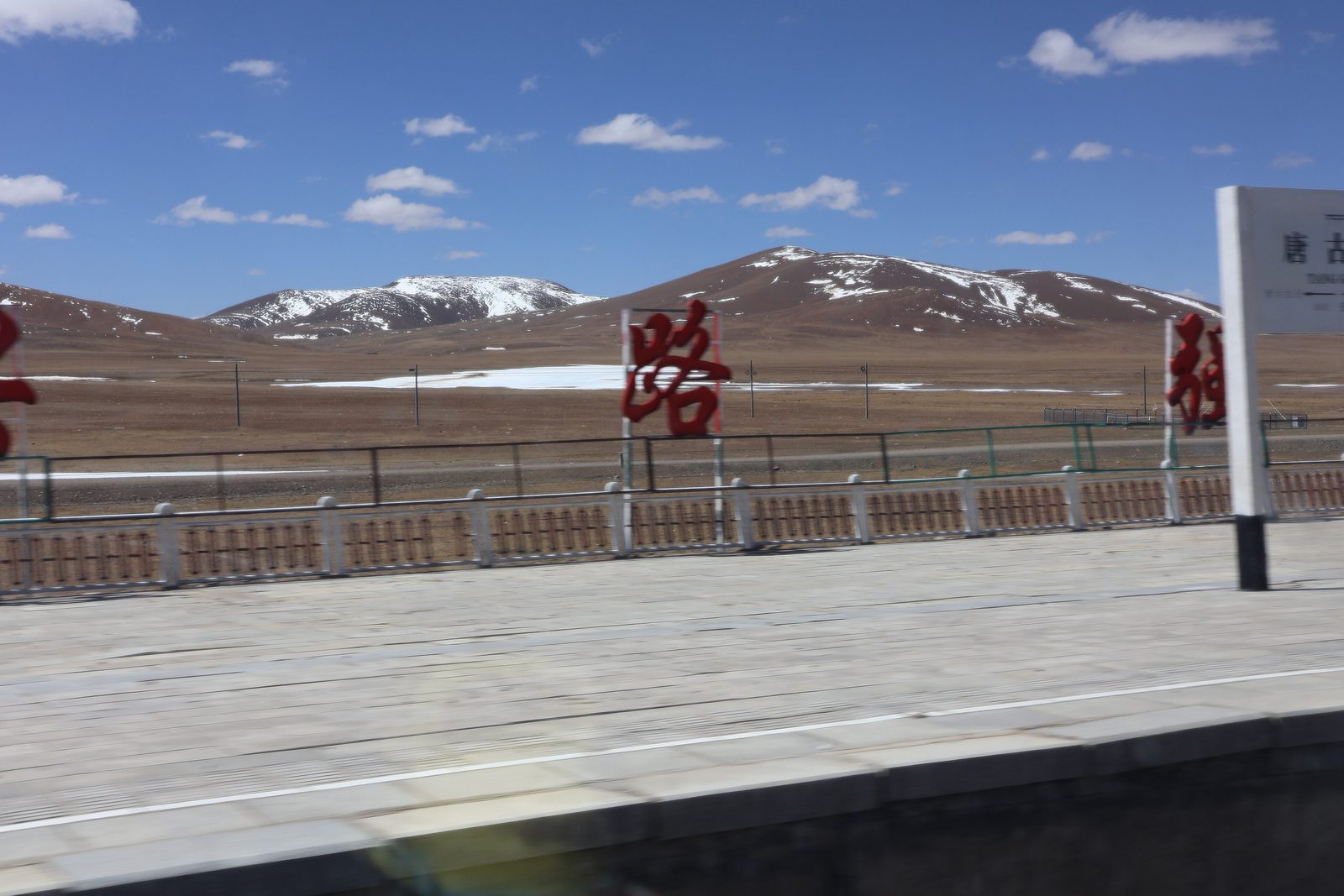
Photo: Schwalbe / Wikimedia Commons, CC BY 4.0
The train therefore provides a gentler transition, but it does not replace proper acclimatisation after arrival in Lhasa.
Trains operating between Golmud and Lhasa normally provide both centralised oxygen enrichment and individual oxygen outlets. Passengers may also be asked to complete a health registration form.
After arriving in Lhasa, we recommend:
- Keeping the first day quiet and unhurried
- Avoiding strenuous exercise
- Walking slowly, especially on stairs
- Drinking water regularly without forcing excessive amounts
- Avoiding alcohol during the first 24–48 hours
- Eating light and familiar meals
- Resting even if you initially feel well
Mild headache, fatigue, reduced appetite, light dizziness and disturbed sleep can occur after arrival. These symptoms should be monitored rather than ignored.
If symptoms worsen despite rest, or if a traveller develops confusion, loss of coordination, breathlessness at rest or a persistent wet cough, they should seek urgent medical attention and, when advised, descend to a lower altitude.
Travellers considering preventive medication such as acetazolamide, commonly known as Diamox, should consult their physician before travelling. Prescription medication should not be taken casually or borrowed from another traveller.
Who should consult a doctor before travelling?
A pre-travel medical consultation is sensible for anyone who is uncertain about high-altitude travel.
It is particularly important for travellers with:
- Heart or cardiovascular conditions
- Chronic lung disease
- Uncontrolled high blood pressure
- Severe anaemia
- Recent surgery
- Significant mobility limitations
- A current respiratory infection
- A previous history of serious altitude illness
- Pregnancy
- Complex medical conditions requiring regular monitoring
Age alone does not determine whether someone can travel safely at altitude. Overall health, mobility, medical stability and previous response to elevation are more meaningful.
The train should not be viewed as a medical solution for travellers who have been advised against high-altitude travel.
Which city should you depart from?
Several major Chinese cities offer direct train services to Lhasa — the table near the top of this guide lists the current routes, train numbers and times. However, for a smoother experience, we generally recommend starting from Xining, where the plateau scenery begins and the journey to Lhasa is much shorter. Operational changes or coordinated transfers may occur, particularly around Xining.
Xining: the most practical starting point. For most international travellers, Xining is the recommended starting point.
Reasons to choose Xining include:
- It is the main gateway to the Qinghai–Tibet Railway
- The most distinctive plateau scenery begins after Xining
- The journey is long enough to experience the railway without spending two or three full days on board
- Travellers can rest in Xining before boarding
- Xining's elevation of approximately 2,275 metres / 7,460 feet provides an intermediate step before reaching Lhasa
Staying one or two nights in Xining may make the journey more comfortable. Depending on the itinerary, travellers may visit Qinghai Lake, a local market, a mosque or a Tibetan Buddhist monastery before continuing to Tibet.
Other possible departure cities.
Lanzhou. Lanzhou offers a slightly longer journey than Xining and can be convenient for travellers combining Tibet with Gansu Province or the Silk Road.
Chengdu. Chengdu is a suitable starting point for travellers combining Sichuan and Tibet. However, the train journey is considerably longer, and Soft Sleeper tickets can be limited.
Chongqing. Chongqing can be convenient for travellers already visiting the city, but the journey is long and ticket availability may be limited.
Beijing. The journey from Beijing normally takes around two days or more. It is best suited to travellers with ample time who enjoy long-distance rail travel.
Shanghai. The journey from Shanghai is very long. Although it offers a cross-country experience, most of the signature plateau scenery still begins after Xining.
Guangzhou. Guangzhou is one of the longest possible starting points. It is most appropriate for travellers who specifically want an extended overland rail experience.
Our practical recommendation. If the train experience is important but you do not want to spend several nights on board, travel to Xining first, stay for one or two nights, and then board the train to Lhasa.
Required travel documents
International travellers generally cannot enter and travel independently within the Tibet Autonomous Region.
The journey must normally be arranged through an appropriately authorised travel agency, with a confirmed itinerary, local guide, transportation and required permits.
Main documents. Most international travellers will require:
- A valid passport
- A valid Chinese visa, unless entering China under an applicable visa-free policy
- A Tibet Travel Permit
- Additional permits when visiting certain restricted or border areas
Destinations such as Everest Base Camp, Mount Kailash, Ngari and certain border regions may require additional approvals.
Permit requirements can depend on:
- Nationality
- Type of Chinese visa
- Occupation in certain cases
- Planned destinations
- Entry and departure points
- Current administrative requirements
Travellers entering China under a visa-free arrangement will still normally require the appropriate Tibet travel approval.
One rule has tightened recently and catches many travellers out: since 13 March 2026, stations nationwide check the original Tibet Travel Permit for all journeys into Tibet, by train as well as by air — a photocopy or a phone photo is no longer accepted. Our Tibet Travel Permit guide explains the full process and timing.
When to apply. We recommend providing your passport and visa documents at least 30 days before departure, especially for peak-season or more complex itineraries. This gives ORILIVANT CHINA JOURNEYS enough time to coordinate permits, train tickets and other arrangements. Additional time should be allowed for:
- Peak travel seasons
- Special visa categories
- More complex Tibet itineraries
- Border areas
- Mount Everest or Mount Kailash journeys
- Public holidays
Permit processing is not entirely within the travel agency's control. Last-minute Tibet arrangements should therefore be avoided.
Documents you may need to provide. Depending on your circumstances, you may be asked to provide:
- A clear colour copy of your passport information page
- A copy of your valid Chinese visa
- A residence permit, if applicable
- Employment or study documents for certain visa categories
- Your confirmed Tibet itinerary
- Arrival and departure details
The name, passport number, date of birth and nationality used for the permit and train ticket must match your current passport exactly.
Carrying your permit. Travellers may be required to present their Tibet Travel Permit when collecting tickets, entering the railway station, passing security or boarding the train.
Keep the following documents accessible:
- Original passport
- Tibet Travel Permit documents provided by the travel organiser
- Train reservation information
- Contact details for the local travel team
Do not rely only on an informal phone screenshot unless your travel organiser has confirmed that it is acceptable at your departure station.
Booking the train ticket
China's railway system uses real-name ticketing. International travellers may purchase railway tickets using a valid passport.
The passenger information on the ticket must match the passport exactly.
Tickets go on sale fifteen days before departure on the official 12306 system, and the Lhasa trains sell out within hours of release. Agencies that secure berths on a traveller's behalf normally add a service fee of roughly ¥300–500 per ticket on top of the net fare — worth knowing when comparing quotes.
When do tickets go on sale? China Railway's advance-sales period may change. Tickets cannot normally be issued many months before departure, even when the overall Tibet journey has already been confirmed.
Providing your information early allows the travel organiser to prepare the booking and attempt to secure the ticket as soon as the official sales period opens.
When are tickets most difficult to obtain? Demand is particularly high during:
- July and August
- The National Day holiday period around October 1–7
- Chinese public holidays
- School holiday periods
- Popular spring and autumn travel dates
Soft Sleeper compartments are limited, and demand can be considerably higher than supply.
Why a specific train cannot always be guaranteed. Ticket allocation varies by train and departure station. A carefully designed travel plan should therefore include:
- A preferred departure city
- One or two alternative departure cities
- Some flexibility with the travel date
- A backup flight option if necessary
A train journey should be presented as a carefully managed request until the railway officially issues the ticket.
Choosing the right cabin
Soft Sleeper — recommended. A Soft Sleeper compartment normally contains:
- Four berths
- Two upper and two lower beds
- A compartment door
- Bedding and a pillow
- A small table
- Limited storage space
- Shared toilets and wash areas at the end of the carriage
This is generally the most comfortable and practical option for international travellers. Soft sleeper berths measure about 75 by 190 centimetres, and each Lhasa-bound train carries only around sixty-four of them — against more than five hundred hard sleeper berths. That imbalance is why soft sleepers sell out first everywhere on this route.
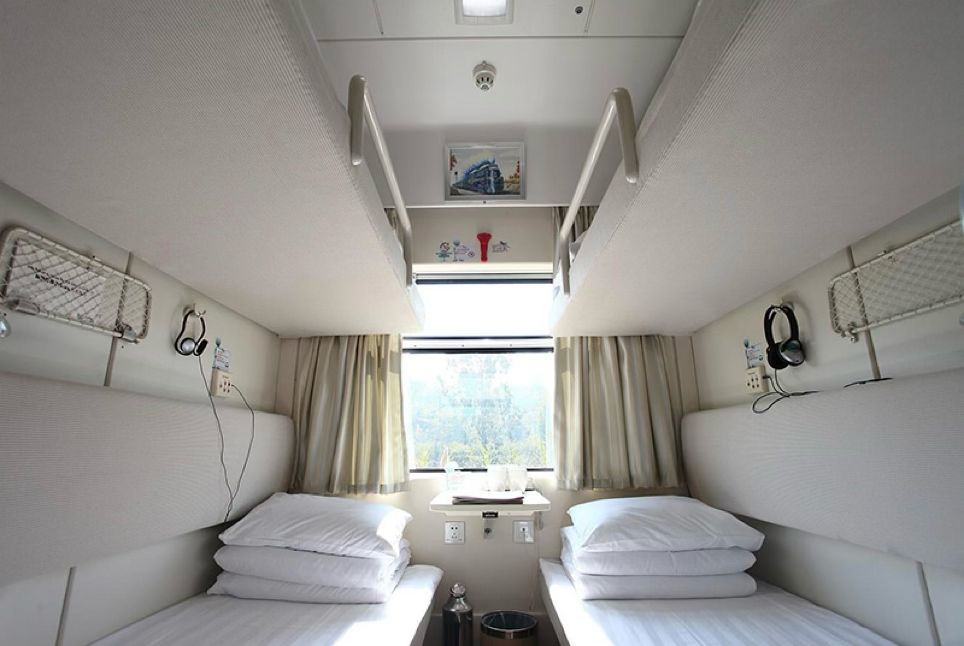
Lower or upper berth? A lower berth is easier to access and is more suitable for travellers with knee, hip or mobility concerns. During the daytime, it may also function as shared seating for the compartment.
An upper berth provides more privacy but requires climbing a narrow ladder.
Berth preferences can be requested, but they cannot always be guaranteed.
Hard Sleeper. Despite its name, a Hard Sleeper berth is padded. The main differences are:
- Six berths in each open compartment
- Three levels on each side
- No compartment door
- Less headroom
- Less privacy
- A busier and more social atmosphere
Hard Sleeper can be enjoyable for adventurous travellers, but it may not suit anyone who sleeps lightly, values privacy or finds climbing difficult. Its berths are narrower — about 60 by 180 centimetres across three tiers — and there is no door on the bay.
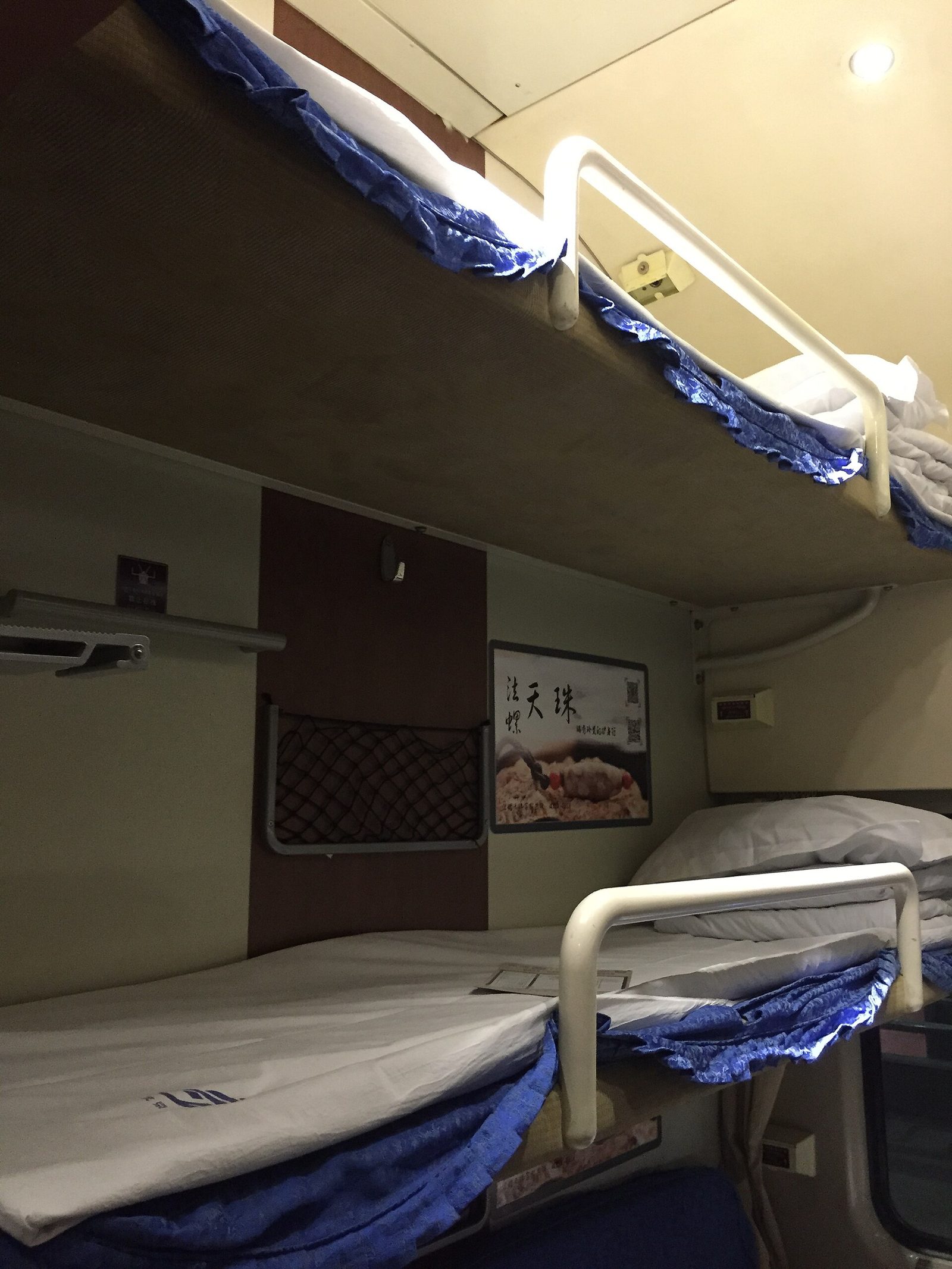
Photo: N509FZ / Wikimedia Commons, CC BY-SA 4.0
Hard Seat. A seated ticket is not recommended for the journey to Lhasa. Sitting upright for 20 hours or more can be physically exhausting, particularly as the train enters high altitude.
Private compartments. Purchasing all four Soft Sleeper berths may make private use of the compartment possible. However, this depends on ticket availability and current railway rules.
Passengers of different genders may share a sleeper compartment unless all available berths are booked together. Conductor staff will usually help travellers of the same family swap berths with other passengers shortly after boarding.
What is the train like?
The Qinghai–Tibet train is comfortable and practical, but it should not be viewed as a luxury scenic train.
It offers an authentic long-distance Chinese railway experience with shared facilities and relatively simple on-board services.
Bedding. Sleeper tickets normally include:
- Mattress pad
- Sheet
- Pillow
- Blanket or quilt
Bringing a lightweight sleep liner is optional rather than essential.
Toilets. Carriages generally have shared toilets at the end of the corridor.
Soft sleeper carriages normally have one Western-style and one squat toilet at the end of the corridor; hard sleeper carriages usually have two squat toilets. A Western-style toilet cannot be guaranteed in every carriage, and the toilets lock whenever the train is standing at a station.
We recommend carrying:
- Toilet paper or tissues
- Hand sanitiser
- Wet wipes
- A small toiletry bag
- A disposable face towel, if preferred
Toilets may be locked shortly before and during longer station stops.
Washing facilities. Shared sinks are normally available, but there are no passenger showers.
A simple overnight hygiene kit is more practical than a large toiletry bag.
Power and charging. Power outlets may be available inside the compartment or in the corridor. Their location, number and reliability vary.
Bring:
- A fully charged power bank that complies with current railway regulations
- Charging cables
- A universal travel adapter
- A multi-port USB charger if travelling with family or companions
Do not depend on having a power outlet beside your berth.
Wi-Fi and mobile service. Reliable on-board Wi-Fi should not be expected.
Mobile reception becomes intermittent as the train crosses remote areas of the plateau.
Before departure, download:
- Music and podcasts
- Books or films
- Offline maps
- Translation tools
- Hotel and guide information
- Copies of essential travel documents
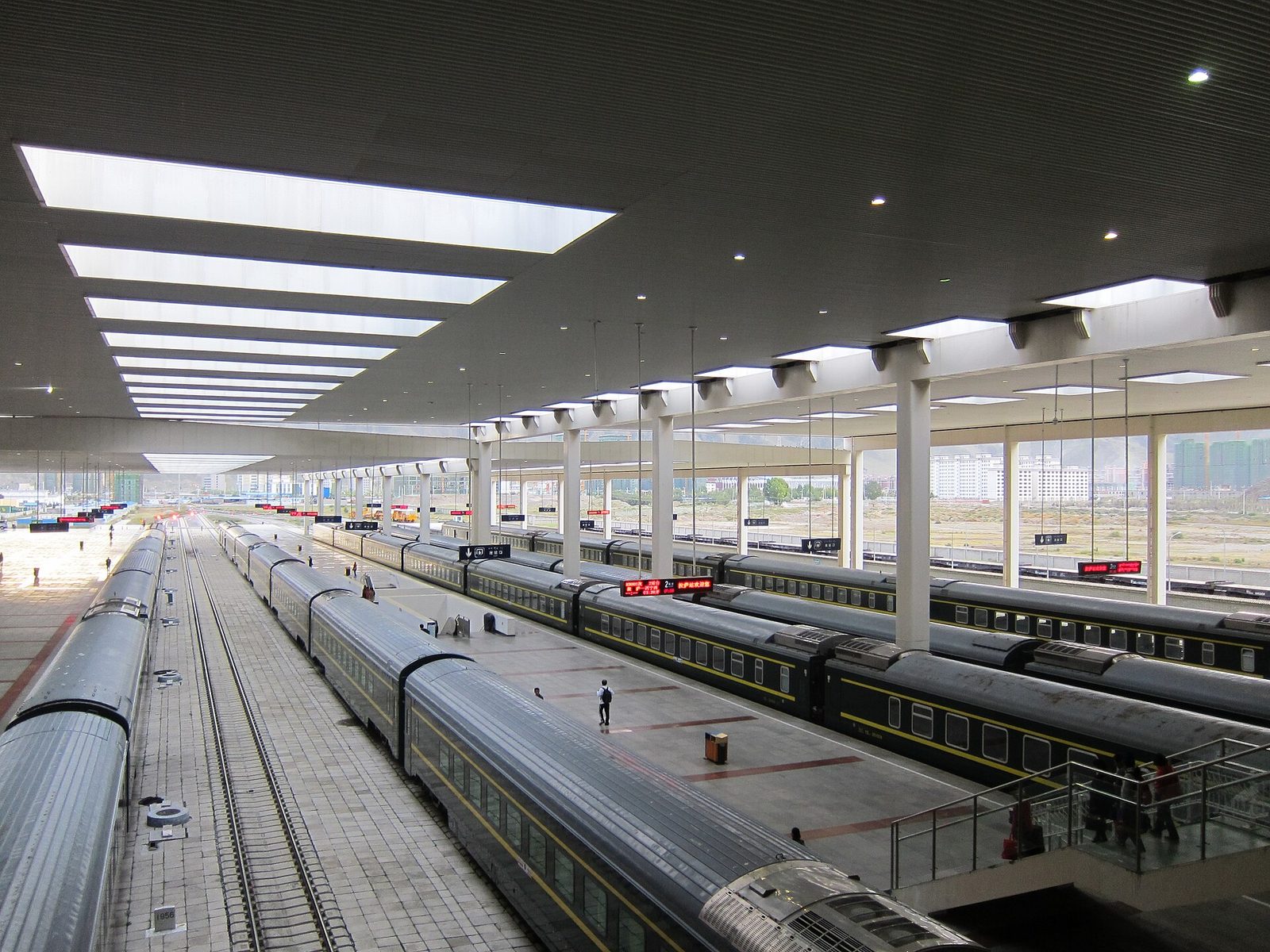
Photo: wei-ren / Wikimedia Commons, CC BY-SA 2.0
Food and drinking water
Every Lhasa train carries a dining car, normally near the middle of the train (often carriage nine) beside the soft sleeper car. It seats forty to fifty passengers at a time in Tibetan-style decor, behind the largest windows on the train — the most pleasant seat on board for any meal. Attendants may not speak English, but the menu carries photographs, and pointing works.
Meal times and prices. Breakfast is served from about 07:30 to 08:30 — porridge, steamed buns, eggs, bread, milk and pickles, around ¥10–25 a serving. Lunch runs from about 11:30 to 14:00 and dinner from about 17:30 to 19:30, with a rotating menu of Chinese and Tibetan cooking: stir-fries, noodles, soups and rice sets, mostly ¥25–40 a dish and up to about ¥130 for the larger set meals. At mealtimes an attendant also pushes a trolley through the carriages selling boxed meals for roughly ¥25–35, and between meals the same trolley returns with snacks, fruit and drinks. The dining car accepts cash, WeChat Pay and Alipay.
What to expect. Only Chinese and Tibetan food is served — Western options are rare, English labels are not guaranteed, and prices run roughly double what the same dish costs on the ground. Hot water is available around the clock from the dispenser at the end of every carriage, so a refillable bottle or small flask covers tea, instant noodles and soup for the whole journey.
Recommended personal food kit. Consider bringing:
- Crackers or bread
- Nuts
- Energy bars
- Dried fruit
- Fresh fruit that travels well
- Chocolate
- Instant oatmeal
- Instant soup
- Familiar snacks
- Electrolyte packets, if normally used
Hot water is commonly available, making tea, instant noodles, soup and oatmeal convenient.
Avoid relying only on salty, spicy or heavy food. Appetite may decrease as the train climbs.
Drink water regularly, but do not force excessive amounts. Drinking extreme amounts of water does not prevent altitude sickness.
Oxygen on the train
The carriages built for the Qinghai–Tibet Railway are sealed and pressurised like an aircraft cabin, with ultraviolet-filtered windows and an oxygen generator room on board. From Golmud onwards, two systems work together:
- A dispersion system. As the train leaves Golmud (2,829 m), staff switch on the generators, and supplemental oxygen is blended into the air-conditioning, raising the oxygen concentration inside each carriage to roughly 23 per cent — a little above the 21 per cent found at sea level.
- Individual oxygen outlets. Every berth and seat has its own port, and attendants distribute disposable tubing to all passengers shortly after boarding, whatever the ticket class. Connect the tube to the outlet, place the ends at your nostrils and breathe normally; in seat carriages the ports are beneath the seats.
Each carriage also displays the current altitude, outside temperature and speed, and the train carries staff trained for altitude emergencies, with arrangements for medical assistance at stations such as Tuotuohe and Nagqu.
Portable oxygen canisters are classed as flammable items and are not allowed on the train — and with these two systems you will not need one. Smoking is strictly prohibited on board.
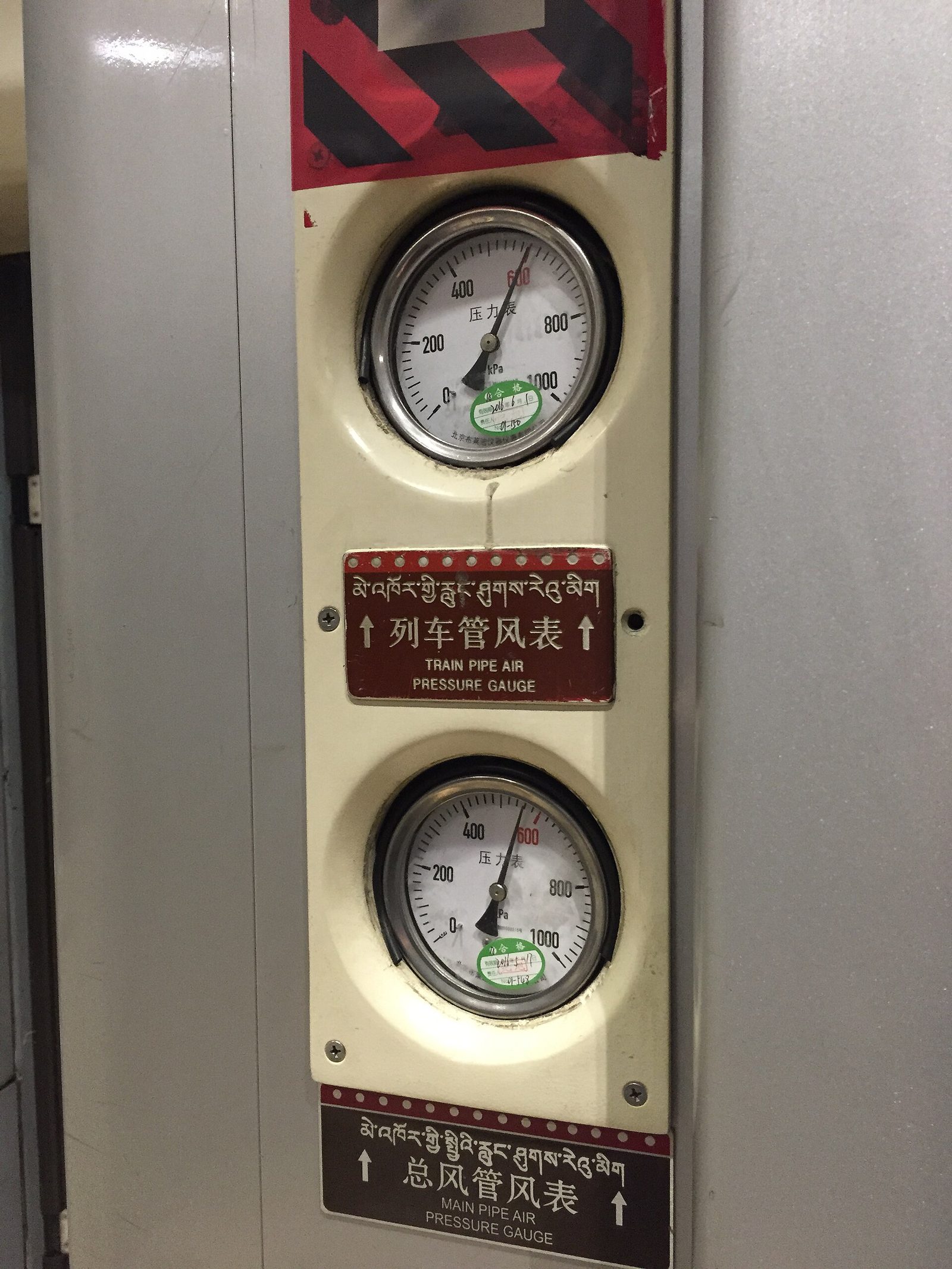
Photo: N509FZ / Wikimedia Commons, CC BY-SA 4.0
The oxygen system is a supportive measure, not a guarantee: mild symptoms can still occur during the highest section. If you feel a headache or nausea coming on, connect your individual outlet early rather than waiting it out, and tell the attendant.
The most scenic sections
Golmud. Golmud is often considered the beginning of the true high-altitude railway experience. Beyond the city, the landscape becomes wider, drier and increasingly remote.
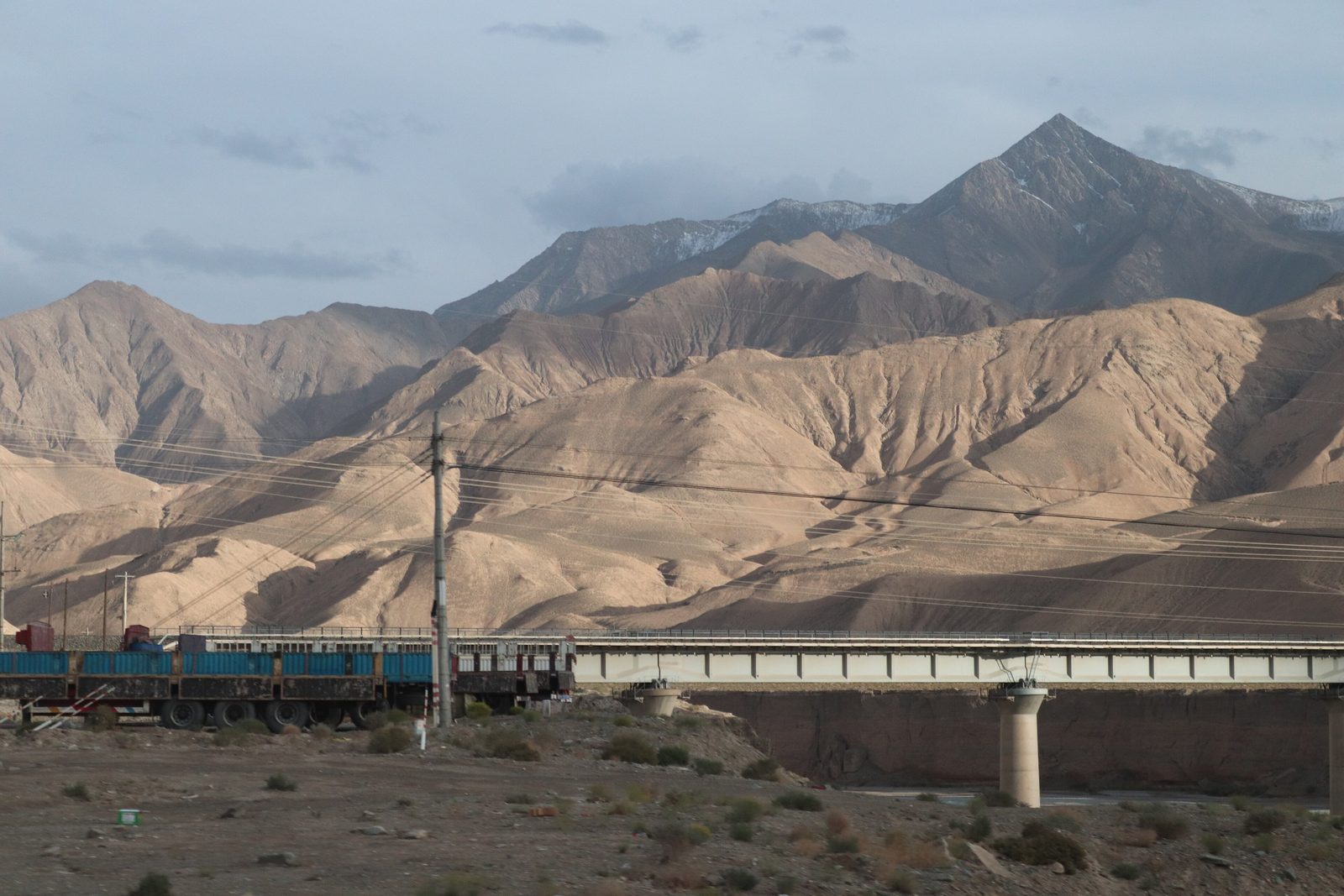
Photo: Liuxingy / Wikimedia Commons, CC BY-SA 4.0
Kunlun Mountains. The train passes beneath snow-covered peaks and through one of the great mountain systems of western China.
Hoh Xil. Hoh Xil is a vast protected wilderness known for Tibetan antelope, wild donkeys and other high-altitude wildlife. Wildlife may occasionally be seen from the train, but sightings cannot be guaranteed.
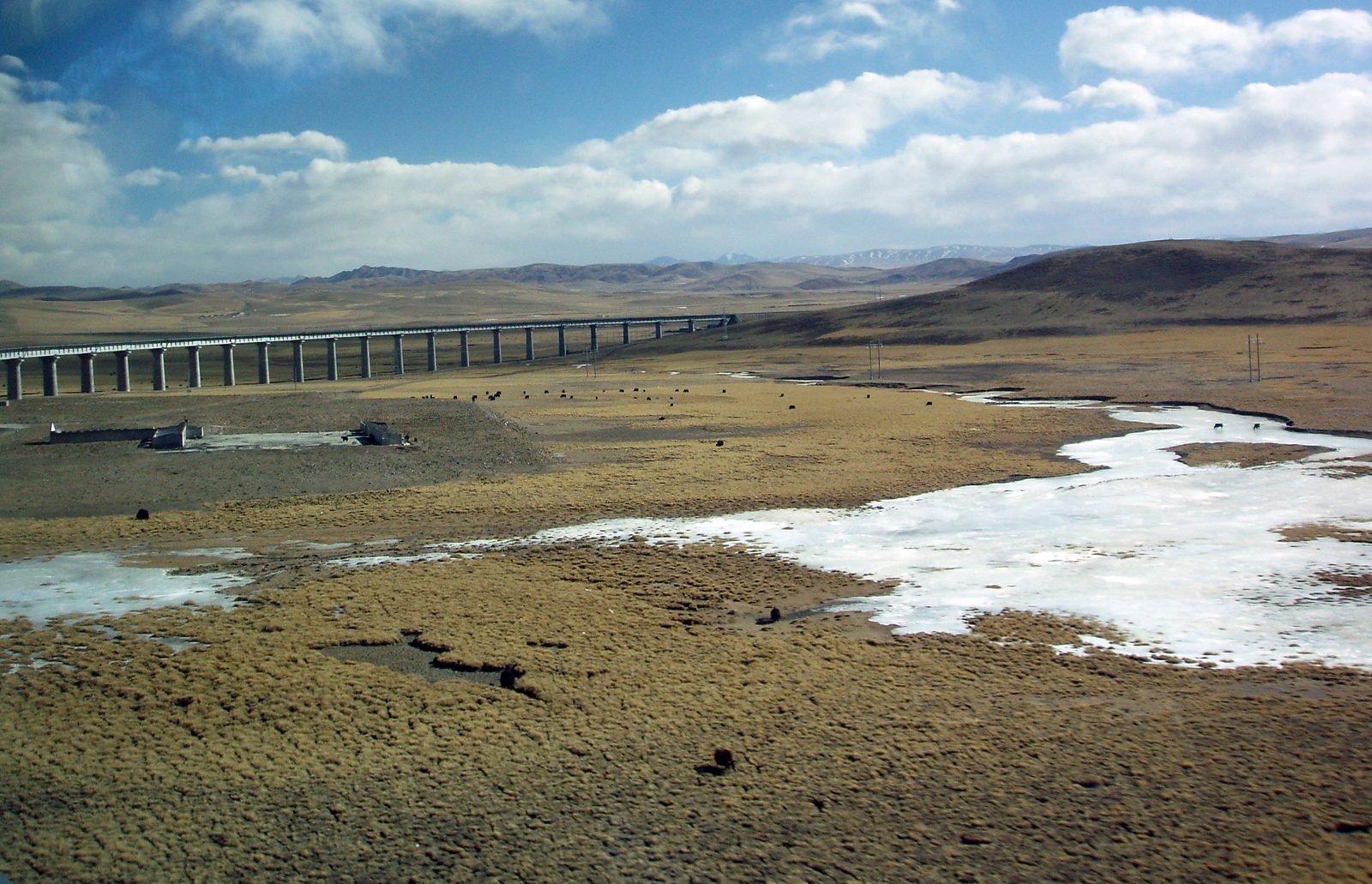
Photo: Fanghong / Wikimedia Commons, CC BY 2.5
Tuotuo River. The train passes through the headwater region of the Yangtze River, one of Asia's great river systems.
Tanggula Pass. At approximately 5,072 metres / 16,640 feet, Tanggula Pass is the highest point of the railway. The crossing may happen quickly, and passengers do not leave the train.
Cuona Lake. Cuona Lake is one of the most beautiful sections of the journey. The railway passes close to the deep blue water, surrounded by open grassland and distant mountains.
Nagqu grasslands. The northern Tibetan landscape is characterised by wide grasslands, rivers, grazing animals and seasonal pastoral settlements.
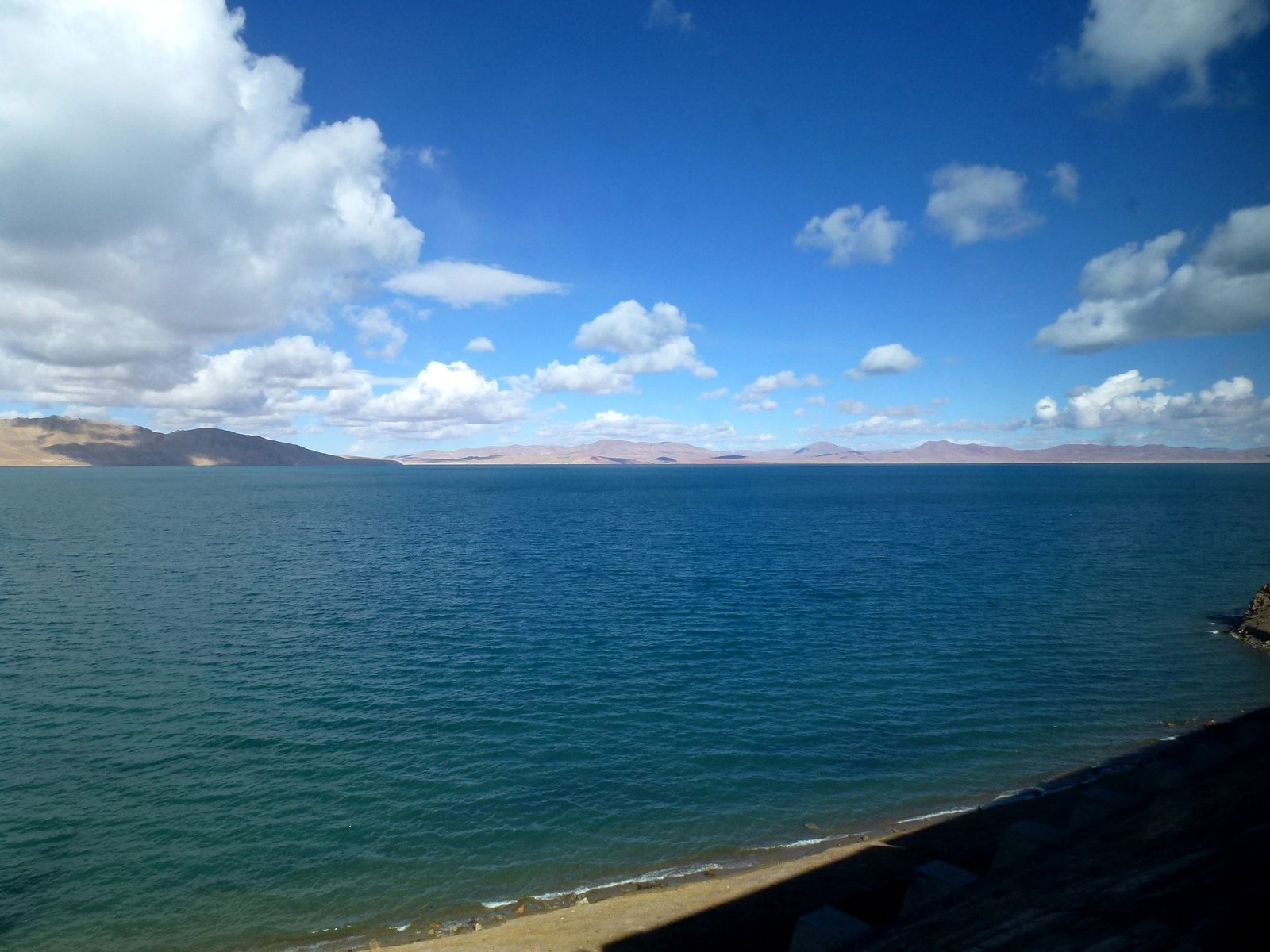
Photo: Hiroki Ogawa / Wikimedia Commons, CC BY 3.0
Photography tips. The train moves quickly, and reflections from the sealed windows can be strong.
For better photographs:
- Keep the camera close to the glass
- Wear darker clothing to reduce reflections
- Do not use flash
- Clean the inside of the window if necessary
- Use a faster shutter speed
- Keep the camera ready, as scenes change quickly
- Take time to enjoy the landscape without photographing every moment
There is no universally "best side" of the train. Important scenery appears on both sides, and the orientation of the carriage may change.
What to pack in your overnight bag
Large luggage may be difficult to access after it has been stored. Keep one small bag beside your berth.
Documents
- Original passport
- Tibet Travel Permit documents
- Train booking confirmation
- Travel insurance details
- Emergency contact information
- Copies of medical prescriptions
Personal comfort
- Soft, layered clothing
- Warm fleece or lightweight insulated jacket
- Comfortable socks
- Slip-on shoes
- Eye mask
- Earplugs
- Neck pillow, if preferred
- Lip balm
- Moisturiser
- Tissues
- Wet wipes
- Hand sanitiser
- Toothbrush and small toiletries
Food and drink
- Refillable bottle
- Familiar snacks
- Tea or coffee
- Light breakfast items
- Electrolytes, if personally appropriate
Health
- Regular prescription medication
- Doctor-approved altitude medication, if prescribed
- Personal pain relief normally used at home
- Personal medical information
- Face mask, if desired
Keep essential medication in your hand luggage rather than inside a large stored suitcase.
Electronics
- Mobile phone
- Charging cable
- Power bank
- Universal adapter
- Camera
- Downloaded entertainment
- Headphones
Luggage rules
An adult passenger may generally carry up to 20 kilograms / 44 pounds of personal belongings free of charge.
For conventional trains, the total external dimensions of each item — length, width and height combined — should generally not exceed 160 centimetres / approximately 63 inches. Each individual item should not exceed 20 kilograms.
Practical considerations are equally important:
- Sleeper compartments have limited storage
- Large hard-shell suitcases can be difficult to manage
- Luggage may need to fit beneath the lower berth or in the storage area above the corridor
- There is no airline-style checked-baggage process for normal personal luggage
- Passengers are responsible for carrying their bags through security and onto the train
A medium-sized suitcase and a small overnight bag are usually more manageable than several large pieces.
China Railway restricts hazardous materials, weapons, flammable substances and certain pressurised or liquid products. Current restrictions should be checked before packing.
Boarding the train
Chinese railway stations can be large and busy.
We recommend arriving approximately 90 minutes before departure. Additional time should be allowed during public holidays and peak travel periods.
The boarding process. The process generally includes:
- Enter the station with your original passport
- Pass through security screening
- Find the correct waiting hall and boarding gate
- Present your passport and Tibet Travel Permit documents
- Board when the gate opens
- Locate the correct carriage and berth
English signs are available in many major stations, but not every staff member will speak English.
Trains may stop for only a few minutes at intermediate stations. Do not leave the train unless the attendant clearly confirms that there is sufficient time.
During the journey
A few simple habits can make the journey considerably more comfortable:
- Change into soft, loose clothing after boarding
- Keep your passport and permit secure but accessible
- Move slowly as the elevation increases
- Avoid smoking and alcohol
- Eat smaller meals rather than one heavy meal
- Keep the aisle and lower-berth area tidy
- Use headphones for music and videos
- Speak quietly during the evening and early morning
- Secure your valuables while sleeping
- Ask the train attendant for assistance if you feel unwell
Sleeper compartments are shared spaces. Patience, courtesy and consideration usually create a warm and memorable experience with fellow travellers.
Arriving in Lhasa
Lhasa Railway Station is located outside the historic city centre.
International travellers should arrange for their approved local guide and travel team to meet them at the designated exit.
Keep these items accessible
- Original passport
- Tibet Travel Permit
- Local guide's name and phone number
- Hotel information
- Warm outer layer
- Drinking water
Recommended arrival plan. After arriving in Lhasa:
- Meet your guide
- Transfer directly to the hotel
- Check in and rest
- Eat a light meal
- Avoid strenuous sightseeing
- Take only a slow, short walk if you feel comfortable
We generally recommend keeping the first day light and avoiding demanding sightseeing, long walks, extensive stair climbing or higher-altitude excursions immediately after arrival.
Train or flight: which is better?
Advantages of the train
- The journey becomes part of the travel experience
- Travellers can see the landscapes of the Qinghai–Tibet Plateau
- The transition to the plateau feels more gradual
- It appeals to travellers who enjoy slow travel
- It offers an authentic long-distance railway experience
Considerations for the train
- The journey requires one or more nights on board
- Soft Sleeper tickets can be difficult to obtain
- Bathroom facilities are shared
- Train schedules may be less flexible
- Travelling by train does not eliminate altitude risk
Advantages of flying
- Flying saves considerable time
- It offers more predictable scheduling
- It can be more convenient for shorter trips
- Luggage handling is generally easier
- It suits travellers who dislike overnight trains
Considerations for flying
- The arrival at high altitude is more sudden
- The first day in Lhasa must still be carefully paced
- Travellers miss the scenery of the Qinghai–Tibet Railway
The train is not automatically the healthier option, and flying is not automatically unsafe. The design of the first few days in Tibet is more important than the method of arrival.
For many travellers, a good balance is to take the train into Tibet and fly out. This preserves the overland experience without repeating a long railway journey.
When is the best time to travel?
April to June. This is a good period for clear landscapes, spring travel and generally moderate visitor numbers. The weather can still be cold at night, particularly across the northern plateau.
July and August. These are the warmest months but also part of the rainy season and one of the busiest periods for domestic tourism. Train tickets can be especially difficult to obtain.
September to mid-November. This is often one of the most attractive periods, for crisp air, clear mountain views and autumn light. Temperatures can fall quickly after sunset.
Winter. Winter can offer clear skies, fewer visitors and a quieter experience in Lhasa. However, temperatures are low, and some remote routes may be affected by weather or seasonal access restrictions.
Regardless of the season, travellers should dress in layers. Temperatures inside the train and outside on the plateau may differ considerably.
Common misunderstandings
"Taking the train means I will not experience altitude sickness." Not necessarily. The train provides a slower transition than flying, but it still reaches extreme elevation. Rest and careful symptom monitoring remain essential.
"I can buy a train ticket first and arrange the Tibet permit later." This is risky. The train ticket, Tibet Travel Permit and overall itinerary should be coordinated together.
"A direct train means I will remain in the same carriage for the entire journey." Not always. Operational transfers or coordinated carriage changes may occur, particularly around Xining.
"The Qinghai–Tibet train is a luxury scenic railway." The route is extraordinary, but the on-board experience is practical, communal and relatively simple.
"I need to start in Beijing or Shanghai to see the best scenery." Most of the distinctive plateau scenery begins after Xining. Starting farther east mainly adds more travel time through lower-altitude regions.
"The train's oxygen system makes high-altitude travel suitable for everyone." No. On-board oxygen is a supportive measure. It does not override medical advice or make every traveller suitable for high altitude.
Who will enjoy this journey most?
The train is particularly rewarding for travellers who:
- Enjoy slow travel
- Are curious about landscapes and geography
- Feel comfortable with shared facilities
- Appreciate authentic local transportation
- Have sufficient time in their itinerary
- Can remain flexible about cabins and departure arrangements
Flying may be more appropriate for travellers who:
- Have limited holiday time
- Require predictable timing
- Find shared overnight trains uncomfortable
- Have significant mobility limitations
- Require easy access to private bathroom facilities
- Prefer a quieter and more controlled environment
Neither option is inherently better. The right choice depends on the traveller's health, available time and preferred style of travel.
Final advice
The Qinghai–Tibet Railway is not simply a way to reach Lhasa. It is a gradual encounter with scale — the cities becoming smaller, the sky widening and the landscape opening into one of the world's highest inhabited regions.
A comfortable and well-prepared journey begins with a few important decisions:
- Arrange the Tibet itinerary and permits before departure
- Keep the departure city flexible until the train ticket is issued
- Choose a Soft Sleeper whenever possible
- Pack a small and well-organised overnight bag
- Discuss high-altitude health with a qualified physician when appropriate
- Keep the first day in Lhasa deliberately quiet
- Allow the journey to unfold at its own pace
For travellers who approach it with patience and realistic expectations, arriving in Tibet by train can become one of the most memorable chapters of the entire journey — not simply the transportation before it.
To begin planning, get in touch and we will confirm current permit, ticketing and route requirements for your dates.
Important travel note
Railway schedules, ticketing procedures, permit requirements and local travel regulations may change.
All arrangements should be reconfirmed according to the traveller's nationality, passport, Chinese visa status, proposed itinerary and departure date before booking.
This guide provides general travel information and does not replace individualised medical advice.
Reviewed 2 October 2026. Routes, train numbers, times and fares reflect the 2026 schedules published for the Qinghai–Tibet Railway; all of them change with the season, and we reconfirm every departure before ticketing.